



Why do your heels become irritated?
The heel skin is naturally thicker than the rest of the body because it supports body weight daily. However, it is also more prone to dryness.
Several factors can explain the appearance of irritations:
- Lack of hydration: dry skin becomes more fragile and cracks easily;
- Friction: open shoes, sandals, or heels can damage the skin;
- Heat and sweating: they increase skin dehydration;
- Wearing unsuitable shoes: too rigid or poorly fitted;
- Walking barefoot: this directly exposes the heel to external aggressions.
When the skin is not nourished enough, it loses flexibility, thickens, and can crack. These cracks, called fissures, can become painful if untreated.

The right steps to soothe irritated heels
Even before applying treatments, certain habits can help reduce irritations and speed up skin repair.
Clean your feet gently
Prefer washing your feet with a mild soap, free of harsh agents. Also avoid water that is too hot, as it increases dryness.
Dry properly
Pay special attention between the toes and on the heel: persistent moisture can weaken the skin and promote irritations.
Exfoliate regularly
When exfoliating your body, feet are often forgotten, mistakenly! Once or twice a week, use a pumice stone or a gentle file to remove dead skin on your heel. This helps moisturizing treatments penetrate better.
Be careful not to over-exfoliate: excessive exfoliation can worsen irritations!
Avoid friction
Choose comfortable shoes with good foot support, and opt for socks made of natural, breathable materials: cotton is your best ally here! If needed, you can also use protectors or pads to reduce pressure on the heel.
Deep hydration: the key to effective repair
Hydration is the essential step to repair irritated heels. It helps restore the skin barrier, soften the skin, and prevent cracks.
How to choose rich and nourishing treatments?
Choose formulas containing nourishing ingredients like shea butter, hyaluronic acid, squalane, glycerin, and vegetable oils (sweet almond, coconut, argan).
These active ingredients help retain water in the skin and strengthen its elasticity.
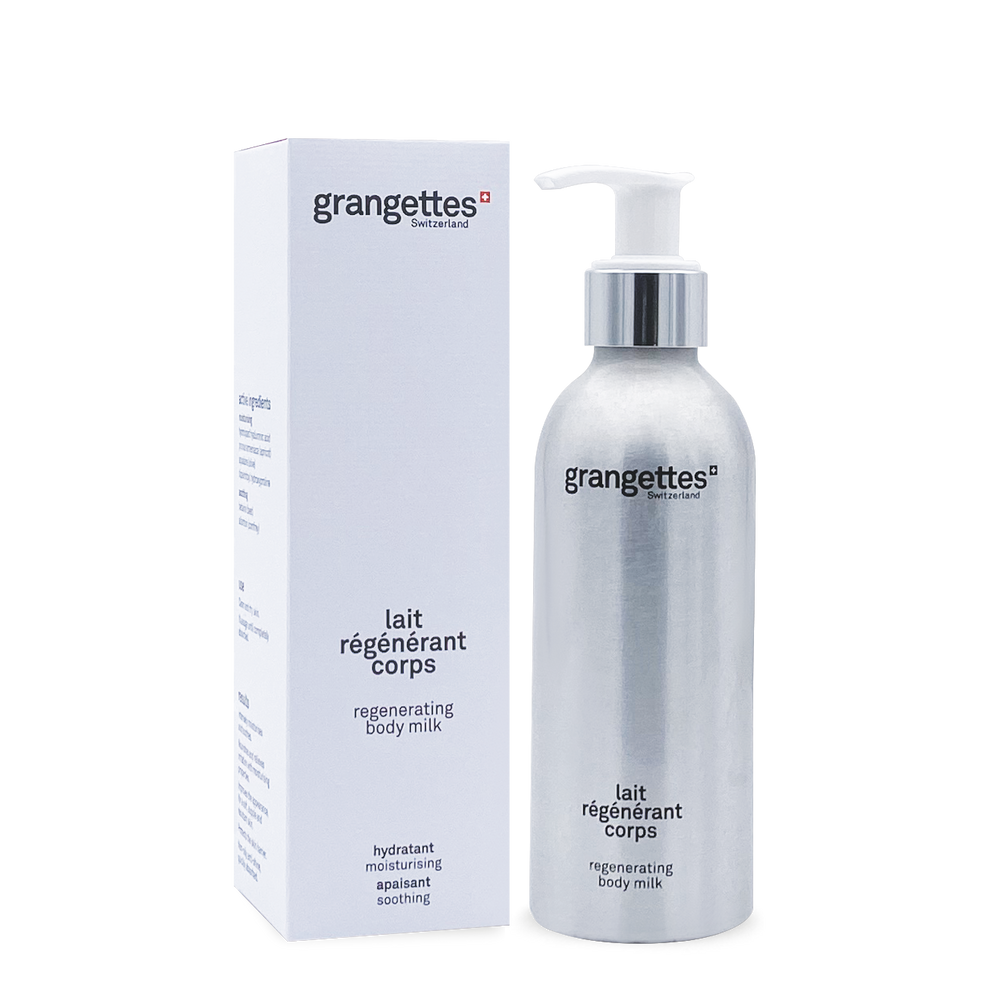
Rely on Grangettes Switzerland regenerating body milk
The Grangettes Switzerland regenerating body milk is particularly beneficial for irritated heels. Its rich and nourishing formula helps repair the skin deeply while providing comfort and suppleness.
This type of care is ideal for:
- Soothe discomfort;
- Restore the skin barrier;
- Prevent cracks;
- Restore soft and smooth skin.
For best results, apply morning and evening on clean feet. Evening application is especially strategic, as the skin regenerates during the night.
Massage the area well to help the product penetrate and effectively repair your irritated heel.
- Regular price
- CHF 35.00
- Regular price
- Sale price
- CHF 35.00
- Unit price
- per
Natural remedies to repair heels
In addition to cosmetic treatments, some natural solutions can strengthen heel hydration
Disinfect if necessary
If a crack is open or painful, before applying any treatment, be sure to clean it with a mild antiseptic to prevent infection.
Foot baths
A warm foot bath of 10 to 15 minutes helps soften the skin.
You can add:
- Epsom salt to calm
- A few drops of lavender essential oil to soothe irritations
After bathing, dry your feet well by patting them with a towel and apply your Grangettes Switzerland regenerating body lotion.

Vegetable oils
Natural oils are excellent allies that can be used alongside regenerating body lotion. In the evening, before going to bed, apply:
- Coconut oil: it is nourishing and reparative;
- Argan oil: it helps restore the skin’s hydrolipidic layer;
- Sweet almond oil: it is soothing.
Apply generously on the heels, then put on cotton socks to maximize the treatment’s effectiveness before going to bed.
Honey
Honey has healing and moisturizing properties. Applied as a mask on the heels for 20 minutes, it helps repair the skin.
Bandages
Specific bandages for cracked heels can relieve pain and speed up healing. They help soothe irritation by perfectly fitting the shape of your foot.
Preventing daily irritations
To prevent the problem from recurring and thus avoid irritations, here’s a focus on good habits to adopt!
- Moisturize your feet every day;
- Wear suitable and comfortable shoes;
- Avoid walking barefoot on harsh surfaces;
- Exfoliate regularly but gently;
- Drink enough water to maintain good overall hydration.
When to see a professional?
In some cases, you may consult a podiatrist or dermatologist to relieve heel irritations. Make an appointment if the cracks are deep and painful, if you notice bleeding, early signs of infection, or if your heels do not improve despite the moisturizing care you apply.
These professionals can offer appropriate treatment and prevent complications.