



Why do we get bumps on the legs?
The skin of the legs is subjected to many micro-aggressions: clothing friction, sweating, shaving, waxing, dry skin, or hormonal variations. Several causes can explain the appearance of bumps in this area of the body: let's take stock!
Cause #1: folliculitis
Folliculitis is one of the most common causes of bumps on the legs. It is an inflammation of the hair follicles, often related to shaving, waxing, or bacterial overgrowth. It appears as small red or white bumps centered on a hair, sometimes sensitive or even painful. It often occurs after very close shaving with a dull blade or when the skin is weakened by friction and excessive sweating.
Cause #2: ingrown hairs
Ingrown hairs occur when the hair fails to break through the skin surface and grows under the skin. A small red bump is then observed, sometimes firm, with a dark spot visible under the epidermis. This phenomenon is common after waxing or shaving, especially in people with thick or curly hair.
Cause #3: keratosis pilaris
Keratosis pilaris is a very common benign condition. It manifests as multiple small rough bumps, often located on the thighs. The skin takes on a grainy appearance, similar to "chicken skin." This characteristic is due to an excess of keratin that clogs hair follicles. It is neither an infection nor a contagious disease, but rather a constitutional skin variation.
Cause #4: body acne
Acne can also appear on the legs, especially in teenagers and young adults. It results from an excessive production of sebum, combined with pore blockage and sometimes bacterial inflammation. Hormonal fluctuations play an important role in its appearance.
Cause #5: allergic or irritant reactions
Sometimes, bumps on the legs are the result of a reaction to a cosmetic product, laundry detergent, or synthetic fabric. The skin becomes red, itchy, and may show small diffuse lesions. In this case, identifying and stopping the responsible product is essential.
How to get rid of bumps on the legs? The action plan!
To effectively eliminate pimples on the legs, several measures can help you...
Tip #1: adopt a gentle cleansing routine
To avoid pimples on the legs, and on the body more broadly, avoid shower gels that are too harsh and damage the skin barrier. A gentle cleanser, used with lukewarm rather than hot water, is more than enough. Drying should also be gentle: pat the skin softly rather than rubbing vigorously. Respected skin is less prone to inflammations.
Tip #2: exfoliate regularly, without excess
Exfoliation helps prevent ingrown hairs and limits the accumulation of dead cells. However, it should remain moderate so as not to further irritate the skin.
The most suitable types of exfoliation are:
-
A gentle scrub once or twice a week;
-
An enzymatic exfoliant for sensitive skin;
-
Treatments containing AHAs or BHAs at low concentration.
However, when pimples are inflammatory or painful, it is better to stop mechanical scrubs.

Tip #3: hydrate daily
Body hydration is a key step often neglected after the shower. Yet, dry skin tends to thicken, which promotes the clogging of hair follicles. Applying a moisturizing treatment daily, ideally after the shower on slightly damp skin, allows you to maintain a balanced skin barrier that is more resistant to irritations.
The ingredients particularly interesting for hydrating your skin are:
-
Hyaluronic acid;
-
The plant-based squalane;
-
Aloe vera;
-
Shea butter;
- Allantoin.
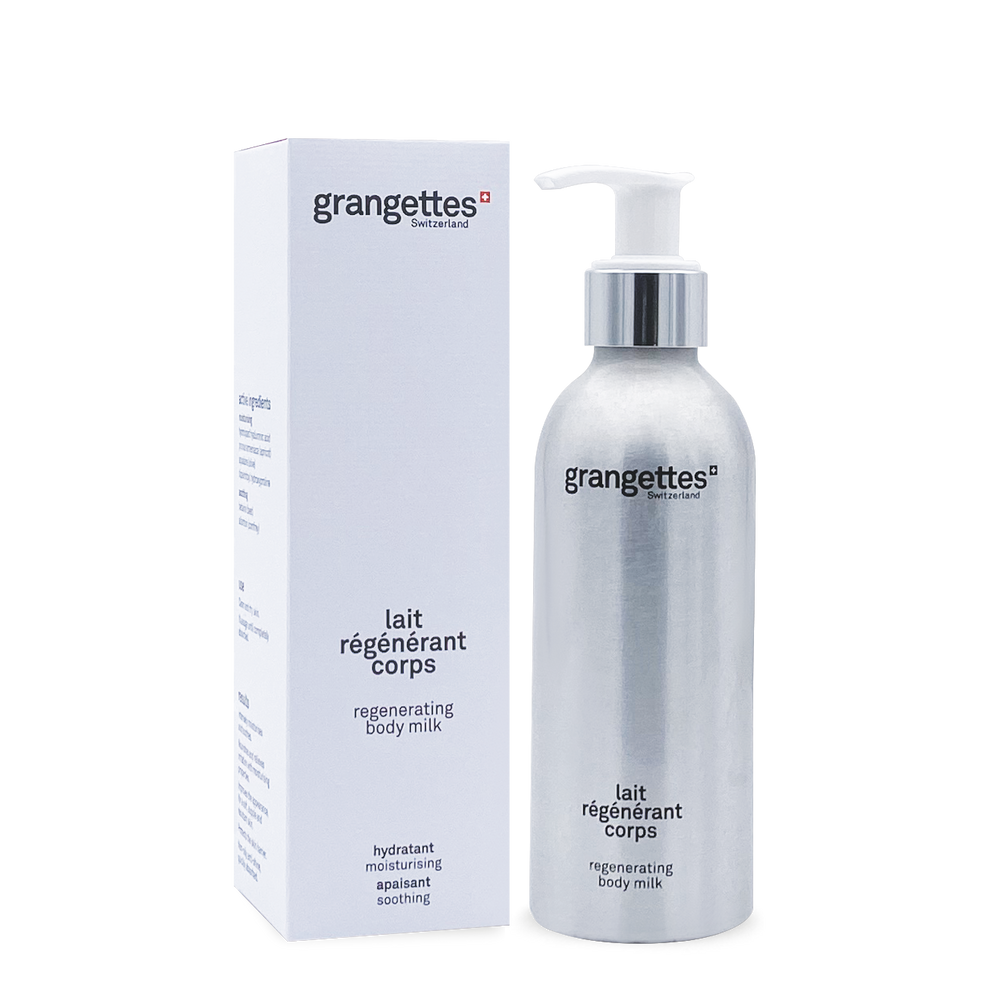
The Grangettes Switzerland regenerating body milk is ideal for pampering your skin: applied after the shower, it deeply and lastingly hydrates your skin thanks to powerful active ingredients such as hydrolyzed hyaluronic acid, prunus armeniaca (apricot), squalane (olive), and dipalmitoyl hydroxyproline.
By applying this body lotion daily, after showering, you gradually improve your skin’s texture, making it perfectly smooth and healthy!
- Regular price
- CHF 35.00
- Regular price
- Sale price
- CHF 35.00
- Unit price
- per
Tip #4: review your hair removal method
Shaving is often involved in the appearance of bumps on the legs. To avoid skin eruptions, several tips:
- Choose a clean and well-sharpened blade;
- Use an appropriate shaving product such as organic soap or shaving foam;
- Shave in the direction of hair growth to limit microtraumas.
- Moisturize the skin after shaving to soothe it.
Tip #5: wear appropriate clothing
Very tight clothing promotes friction and maceration, which sustains inflammation. Favor natural and breathable materials like cotton or linen to allow the skin to breathe better: to limit repeated irritations, this is key!
Tip #6: treat bumps locally
Depending on the nature of the lesions, targeted care may be necessary. Mild folliculitis can benefit from a local antiseptic. In case of more pronounced acne, a specific treatment based on benzoyl peroxide or retinoids may be prescribed by a health professional. However, it is strongly discouraged to pop the bumps, as this increases the risk of infection and scarring.
Tip #7: consult
Certain situations require medical advice. It is recommended to consult if:
-
Your bumps are numerous and painful;
-
The lesions spread rapidly;
-
A significant purulent discharge appears;
-
Fever accompanies the symptoms.
An antibiotic treatment or specific dermatological care may then be indicated.

Can natural solutions help?
Some complementary approaches can soothe the skin, provided they are used with caution. For example, you can use warm compresses to encourage the emergence of an ingrown hair. Aloe vera gel is also known for its soothing properties. Tea tree essential oil, when always used diluted, can have a cleansing effect on the skin.
Attention though: it is important to note that these solutions do not replace medical treatment in case of a significant infection.