



Start by identifying what is causing your skin to crack
Before adding more products, look for what is weakening the area. Cold and dry air are well-known factors, but they are not the only ones. Frequent washing, very hot water, certain cleansing products, repeated friction, or prolonged contact with water can also damage the skin barrier.
The hands are the perfect example: washing, hand sanitizer, household products, cold outdoors… The skin is exposed several times a day.
On the heels, the problem may be different. The skin is subjected to significant pressure and mechanical forces. When the horny layer becomes very thick and less flexible, it can eventually split under the effect of movement.
The first step is therefore to ask yourself a simple question: what is preventing this skin from healing calmly?
As long as the irritation persists, even the best care will struggle to compensate.

Do not strip already weakened skin
A common mistake is to try to remove flakes quickly: scrub, brush, pumice stone, repeated exfoliation… However, cracked skin does not necessarily need to be exfoliated more.
When a crack is present, the priority is to restore the barrier function, not to make the surface perfectly smooth immediately.
The idea? Pause harsh exfoliants and avoid rubbing the painful area directly. On very thickened heels, gentle exfoliation may be considered once the skin has become intact again, but it should not replace daily care.
The skin does not need to be “sanded” in order to heal.
Rethink cleansing
Cleansing can become one of the factors that perpetuate dryness.
Very hot water and overly harsh cleansers can remove some of the lipids present on the surface of your skin. When the skin is already cracked, this can worsen tightness and discomfort. So choose lukewarm water, gentle cleansers, and limit unnecessary washing.
When skin is cracked, gentleness is not a luxury. It is a condition for restoring balance!

Choose a product that does more than just provide water
The word “hydration ” is often used to mean everything and nothing.
Cracked skin needs to regain suppleness and cohesion, which notably involves limiting water loss and supporting its protective barrier.
Interesting formulas therefore combine different types of agents:
- Humectants capable of retaining water;
- Oils and ingredients that help provide comfort and maintain the skin barrier.
But texture matters just as much as the formula!
On a very dry area of the body, a rich lotion may be easier to apply generously every day than an extremely thick balm.
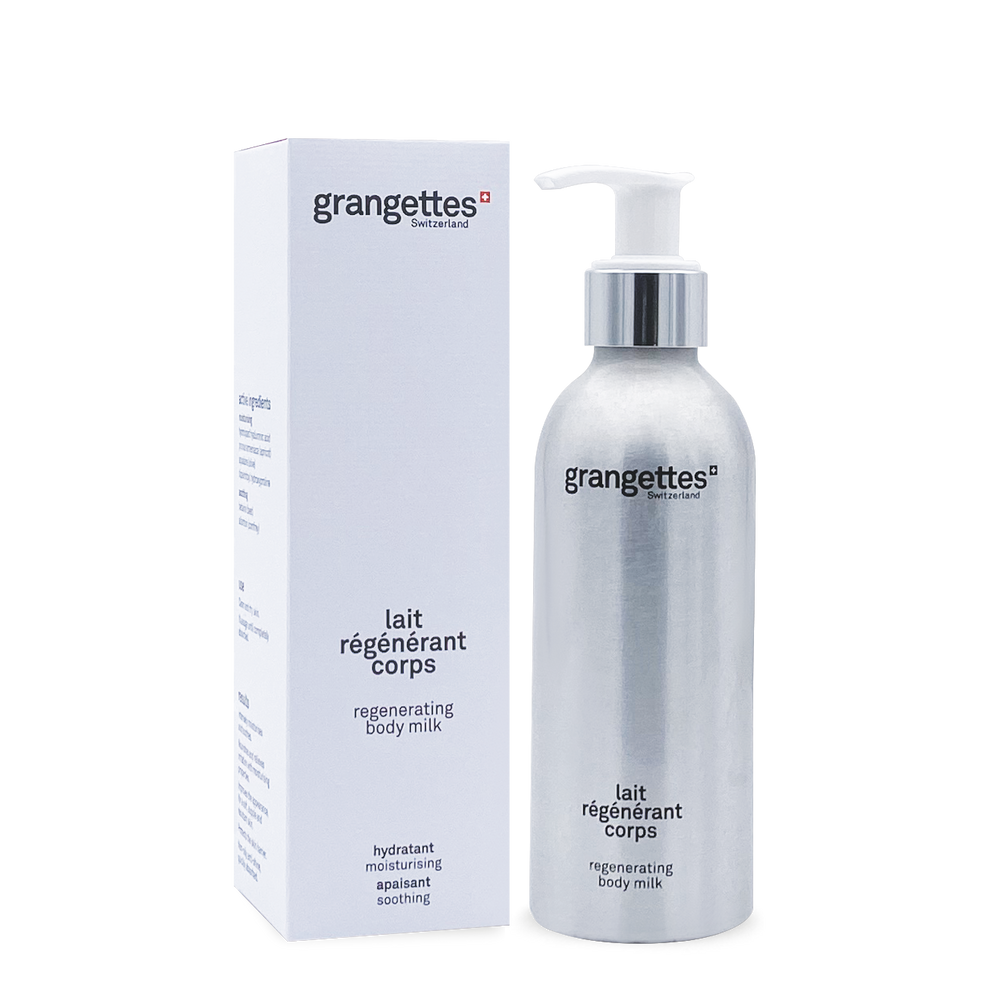
That is precisely the benefit of the Grangettes regenerating body lotion: its texture makes it possible to care for dry areas of the body without turning daily skincare into a burdensome task. It can be used on your legs, arms, elbows or particularly dry areas.
- Regular price
- CHF 35.00
- Regular price
- Sale price
- CHF 35.00
- Unit price
- per
Change your strategy for the face
A crack on the face requires extra care. The skin there is often thinner and exposed to multiple sources of irritation: cold, wind, cleansing, makeup, shaving or friction.
In this context, layering skincare products is not necessarily a good idea. When facial skin is peeling, feels tight or becomes uncomfortable, it may be helpful to temporarily return to a shorter routine: gentle cleansing + soothing care + sun protection in the morning.
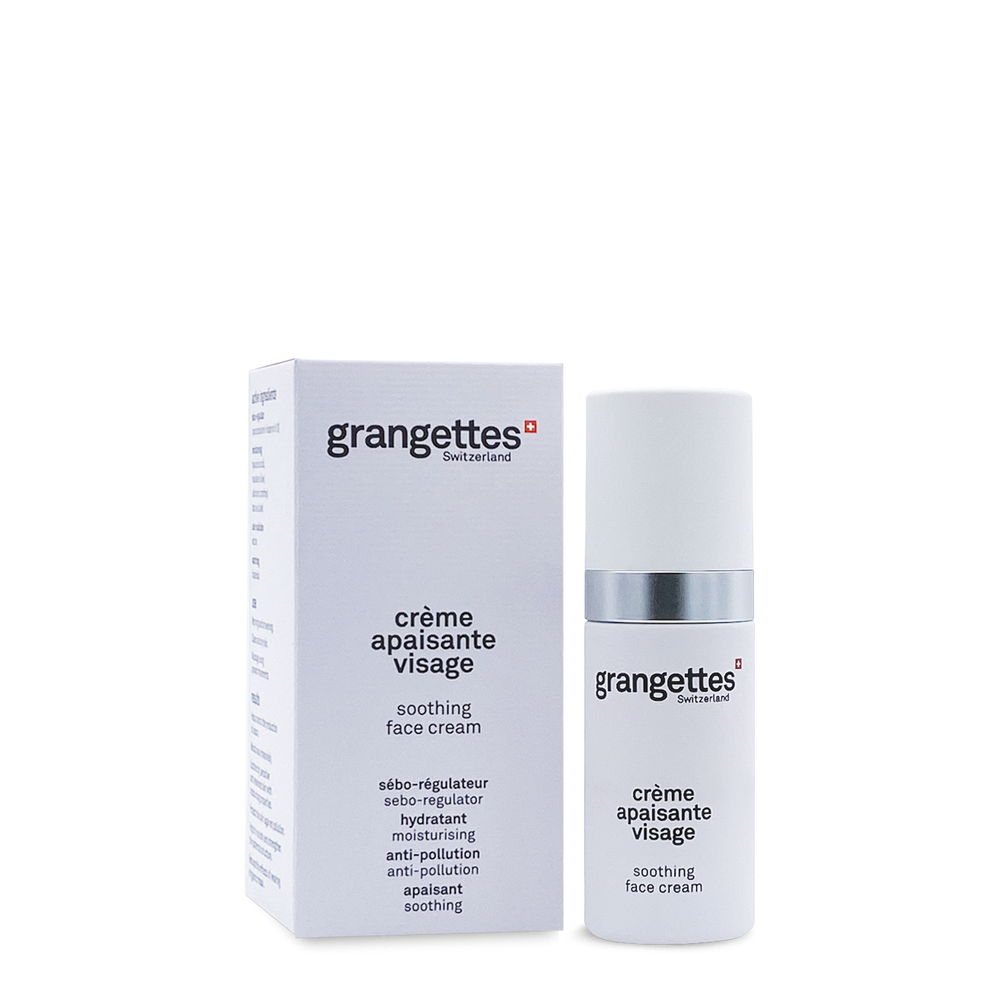
The Grangettes soothing cream can therefore be incorporated into a routine designed for fragile skin. Its formula notably combines bisabolol, hyaluronic acid, and vitamin B12, key ingredients for comfortable, supple skin.
- Regular price
- CHF 35.00
- Regular price
- Sale price
- CHF 35.00
- Unit price
- per
The goal is not to multiply products, but to provide the skin with a less harsh environment in which it can gradually regain its balance.
Treat cracks as a vulnerable area
An idea that is often overlooked: a crack is also a physical break in the skin's surface. It is therefore important to limit the mechanical stresses that could reopen it.
For the hands, wearing suitable gloves during household chores can make a real difference. For the feet, sufficiently comfortable socks and shoes that do not squeeze the affected areas can reduce friction.
For the heels, applying the treatment in the evening can be particularly practical: the skin then benefits from a long period without washing or outdoor exposure.
And rather than waiting for the skin to become extremely dry again, it is better to establish a preventive routine at the first signs of tightness.
Evening can become the strategic time
Nighttime offers a simple advantage: for several hours, the feet are less exposed to friction, shoes, washing, and temperature fluctuations. It is therefore a particularly useful time to turn a few minutes of care into a truly restorative pause.
A foot and hand soak, yes, but not just any way
When the hands or heels are very dry and thickened, a short, lukewarm foot or hand soak can help temporarily soften the horny layer. About ten minutes is generally enough: there is no need to leave your feet and hands soaking for half an hour, as prolonged exposure to water could worsen dryness.
After the bath, gently dry the affected areas without rubbing vigorously, then apply the treatment within the following few minutes. Skin that is still slightly damp is particularly receptive to the application of an emollient.
The bath is therefore not the main repairing step: it simply prepares the skin for the treatment that follows.
Use this moment to treat the thickness, not to strip the skin
If the heels have a ring of very thick, hard skin, it may be helpful, once the skin has softened, to gently use a pumice stone on the callused areas. But this should remain moderate: we are not trying to remove all the callus in one evening.
Thickened skin is partly a response to pressure and mechanical stress. Removing it too aggressively could then cause irritation or a new lesion. Opt for gentle abrasion of the callus rather than aggressive removal. Deep fissures should never be treated with a foot file or blade.
The “mask” for heels or hands: rely on occlusion
The truly worthwhile step in the evening is applying a suitable treatment: a layer of a highly occlusive product, such as shea butter, can limit water loss and keep the skin supple for several hours.
The idea? Apply the Grangettes body lotion after your shower, and a few hours later, just before going to bed, apply the shea butter!
Watch for persistent fissures
Fissured skin is not always simply “very dry.” Persistent, deep, painful fissures that bleed regularly, itch severely, or show signs of inflammation should get your attention.
Certain skin conditions, such as eczema or psoriasis, can cause fissures. Therefore, if the fissures do not improve despite an appropriate routine or if they become severe, it is preferable to seek medical or dermatological advice rather than use more and more products.