



Why do red patches appear on the skin?
Red patches are generally a sign of an inflammatory skin reaction. This reaction can be triggered by various internal or external factors. The skin responds by increasing blood flow in the affected area, which causes this characteristic red coloration.
The most common causes are skin allergies, irritations from cosmetic or household products, insect bites, or certain dermatological conditions. Stress, hormonal fluctuations, and climate changes can also encourage their appearance.
Certain skin diseases can also cause red patches, such as eczema, psoriasis, or hives. In these cases, the patches are often accompanied by intense itching, dryness, or small flakes.
When patches appear suddenly or spread quickly, it is advisable to consult a healthcare professional to identify the exact cause.

Situations that promote red patches
Several everyday factors can weaken the skin and promote the appearance of redness:
- Dry skin is often more reactive. When it lacks lipids and hydration, the skin barrier becomes more fragile and allows irritants to pass through more easily;
- Harsh products can also trigger red patches. Soaps that are too stripping, overly scented shower gels, certain ingredients, or some detergents can disrupt the skin’s balance;
- Temperature changes are also a common factor. Cold, wind, or conversely excessive heat can cause an inflammatory skin reaction;
- Stress also plays an important role. It can worsen certain skin conditions and make the skin more sensitive to external aggressions;
- Some people simply have more reactive skin than others. This is called hypersensitive or reactive skin.
Which shower gel to use to avoid red patches?
To avoid the appearance of red patches, itching, or irritation after showering, choosing the right shower gel is essential. Many redness issues are actually caused by overly harsh cleansing products that damage the skin barrier. Here is a focus on the criteria and ingredients to favor (and avoid) to choose a truly gentle shower gel for the skin.
Choose a gentle cleansing base (the most important criterion)
Some shower gels contain surfactants, which are cleansing agents that remove impurities. Some are very harsh and can strip the skin.
The most irritating surfactants are sulfates, especially:
-
Sodium Lauryl Sulfate (SLS)
-
Sodium Laureth Sulfate (SLES)
These ingredients foam a lot but can dry out the skin and cause redness or stinging, especially on sensitive skin. It is therefore better to choose a sulfate-free shower gel with gentler cleansing bases.
Mild surfactants to favor
Look for ingredients in the formula such as:
-
Coco-glucoside
-
Lauryl glucoside
-
Sodium cocoyl glutamate
-
Sodium cocoamphoacetate
These agents cleanse the skin without damaging its protective barrier, which limits irritation.
Check the pH of the shower gel
The skin naturally has a slightly acidic pH around 5.5. A product that is too alkaline can disrupt this balance and promote irritation and dryness.
Ideally, choose a shower gel:
-
Physiological pH
-
or pH neutral for the skin (between 5 and 6)
This helps preserve the skin barrier and prevent redness.
Irritating ingredients to avoid
For skin prone to red patches, some components are particularly problematic:
-
Artificial colorants;
-
Irritating preservatives (MIT, MCIT);
-
Parabens;
- Certain irritating essential oils.
These substances are often responsible for allergic reactions or skin irritations.
Choose moisturizing shower gels to avoid red patches on the body
A good shower gel for sensitive skin should not only cleanse: it should also preserve the skin’s hydration.
Some ingredients are particularly beneficial:
-
Vegetable glycerin: it moisturizes and protects the skin;
-
Aloe vera: it calms irritation;
-
Colloidal oatmeal: it soothes itching;
-
Shea butter: it nourishes the skin;
-
Vegetable oils (sweet almond, jojoba, argan).
These ingredients help strengthen the skin barrier and reduce redness.
Useful labels to look for on the packaging
To limit red patches on the body, certain indications on the packaging are good guides:
-
Sensitive skin;
-
Hypoallergenic;
-
Sulfate-free;
-
Soap-free;
-
Physiological pH;
-
Dermatologically tested
These formulations are generally designed to reduce the risk of irritation.

Apply body lotion after every shower
Applying a soothing treatment helps calm the skin and prevent the appearance of red patches on the body. Creams rich in moisturizing and repairing ingredients help strengthen the skin barrier and reduce redness.
Favor powerful moisturizing actives
Red patches on the body often appear when the skin is dehydrated or weakened. A good body lotion should therefore contain active ingredients capable of maintaining hydration and strengthening the skin barrier.
Among the most effective ingredients are:
-
Hyaluronic acid: it captures and retains water in the skin
-
Vegetable glycerin: it hydrates and protects the skin
-
Vegetable squalane: it nourishes and strengthens the hydrolipidic film
-
Vegetable oils (apricot, sweet almond, jojoba).
Choose soothing ingredients
To calm redness and inflammation, certain actives are particularly effective:
-
Allantoin: it soothes irritations and promotes skin repair;
-
Betaine: it calms and maintains hydration;
- Aloe vera: it soothes skin prone to irritation and itching.
A formula that combines hydration and soothing actives is ideal for sensitive skin.
Avoid irritating ingredients
Some substances are known to promote redness, especially on sensitive skin. In this regard, avoid body milks containing:
-
Silicones;
-
PEGs;
-
Petrochemical derivatives;
-
Allergens or irritants.
“Clean” formulas limit these types of ingredients and are generally better tolerated by the skin.
Favor light but nourishing textures
The texture of your body milk is also important. The ideal body milk should deeply hydrate, absorb quickly, leave no greasy residue, and protect your skin barrier.
Well-formulated body milks can nourish and soothe irritations while improving the skin’s resilience.
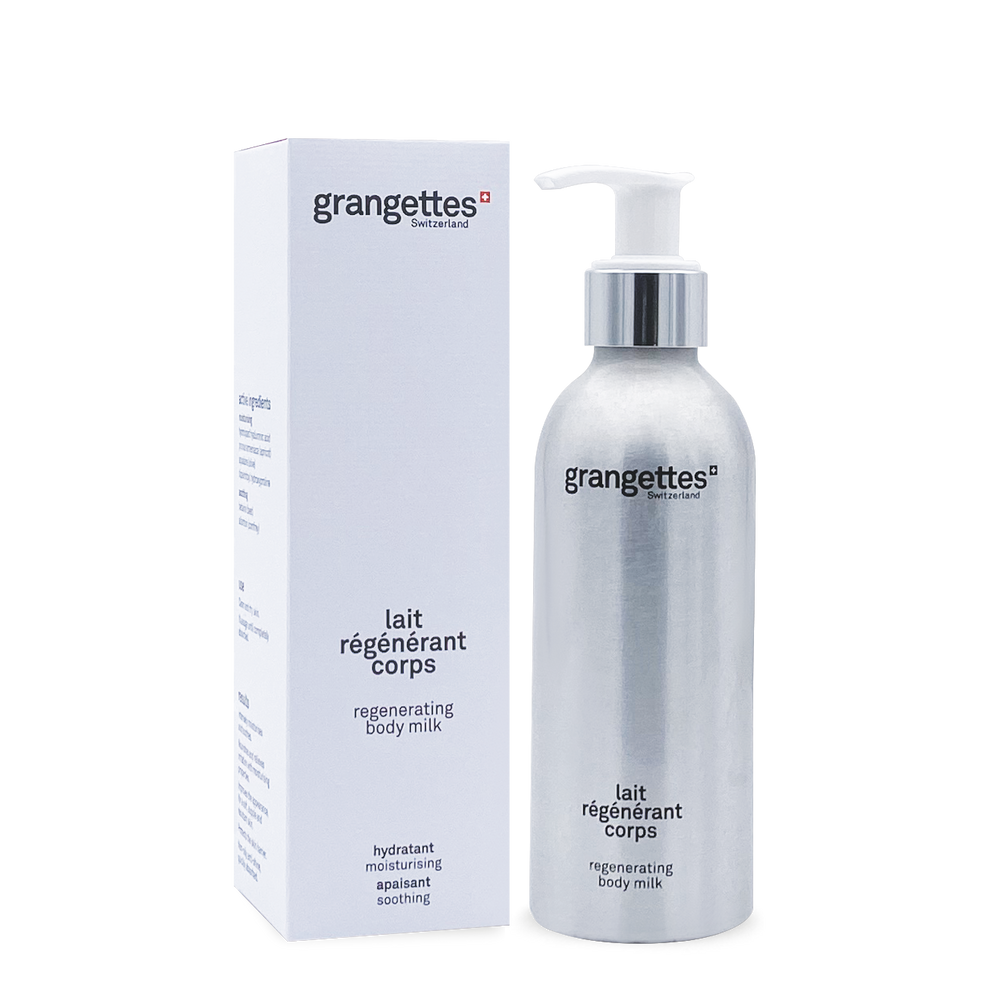
Choose the Grangettes Switzerland regenerating body milk
The Grangettes Switzerland regenerating body milk combines hydrolyzed hyaluronic acid, apricot oil, and olive squalane, active ingredients known for intense hydration and strengthening the skin’s structure. They work in synergy with betaine and allantoin, two ingredients that help soothe the skin and improve skin comfort. But that’s not all: it also excludes parabens, silicones, PEGs, petroleum derivatives, and irritating ingredients, reducing the risk of skin reactions. Dermatologically tested, it is suitable for sensitive skin, making it a great care option for reactive skin.
- Regular price
- CHF 35.00
- Regular price
- Sale price
- CHF 35.00
- Unit price
- per
When to consult a professional?
In most cases, red patches on the body disappear within a few days with proper care. However, some situations require the opinion of a healthcare professional.
It is best to consult if the patches persist for several weeks, if they are accompanied by severe pain, or if they spread quickly over the body.
The presence of fever, blisters, or significant swelling should also prompt seeking medical advice.
A dermatologist can then examine the skin, identify the cause of the problem, and suggest an appropriate treatment.
Preventing the appearance of red patches on the body
Prevention mainly relies on simple daily actions. Using gentle products, regularly moisturizing your skin, and avoiding irritating substances often helps limit the appearance of red patches.
It is also recommended to avoid scratching the affected area. Even if the itching is intense, scratching can worsen skin inflammation and slow down healing.
Protecting the skin from cold and sun is also essential. Climate changes can weaken the skin and promote skin reactions. But that's not all: adopting a balanced diet and managing stress can also have a positive impact on your skin's health.
By taking care of your skin and paying attention to the signals it sends, you will reduce irritation and regain more comfortable skin!